how to build a crypto community manager portfolio that actually gets you hired
a crypto community manager portfolio in 2026 is a public, verifiable profile showing every project you've managed, with third-party proofs attached to each one. screenshots, notion pages, and pdfs no longer close gigs. project devs hire the cm whose past work they can check in under 60 seconds, not the one whose portfolio tells a story. this post is the exact playbook for building that profile.
why the traditional cm portfolio stopped working
five years ago a cm portfolio was a notion page with screenshots of telegram member counts, a few testimonials, and a list of projects worked on.
the screenshot is dead as a hiring signal. founders have seen every variation of faked member counts, photoshopped admin roles, and purchased testimonials. when a dev sees a screenshot, they discount it by default.
the testimonial is dead too. anyone can write a testimonial. anyone can claim any project. a founder has no way to verify that the quote came from the project dev, or that the dev actually meant it, or that the person writing the testimonial ever worked there.
the project list is the weakest of all. "i worked on these ten projects" is something any account can claim. if half the projects are dead and the channels are gone, the claim is unverifiable.
what replaced the old portfolio is the verifiable profile. a profile where every claim has a third-party proof attached, and the proofs themselves live on-chain.
what the modern crypto cm portfolio contains
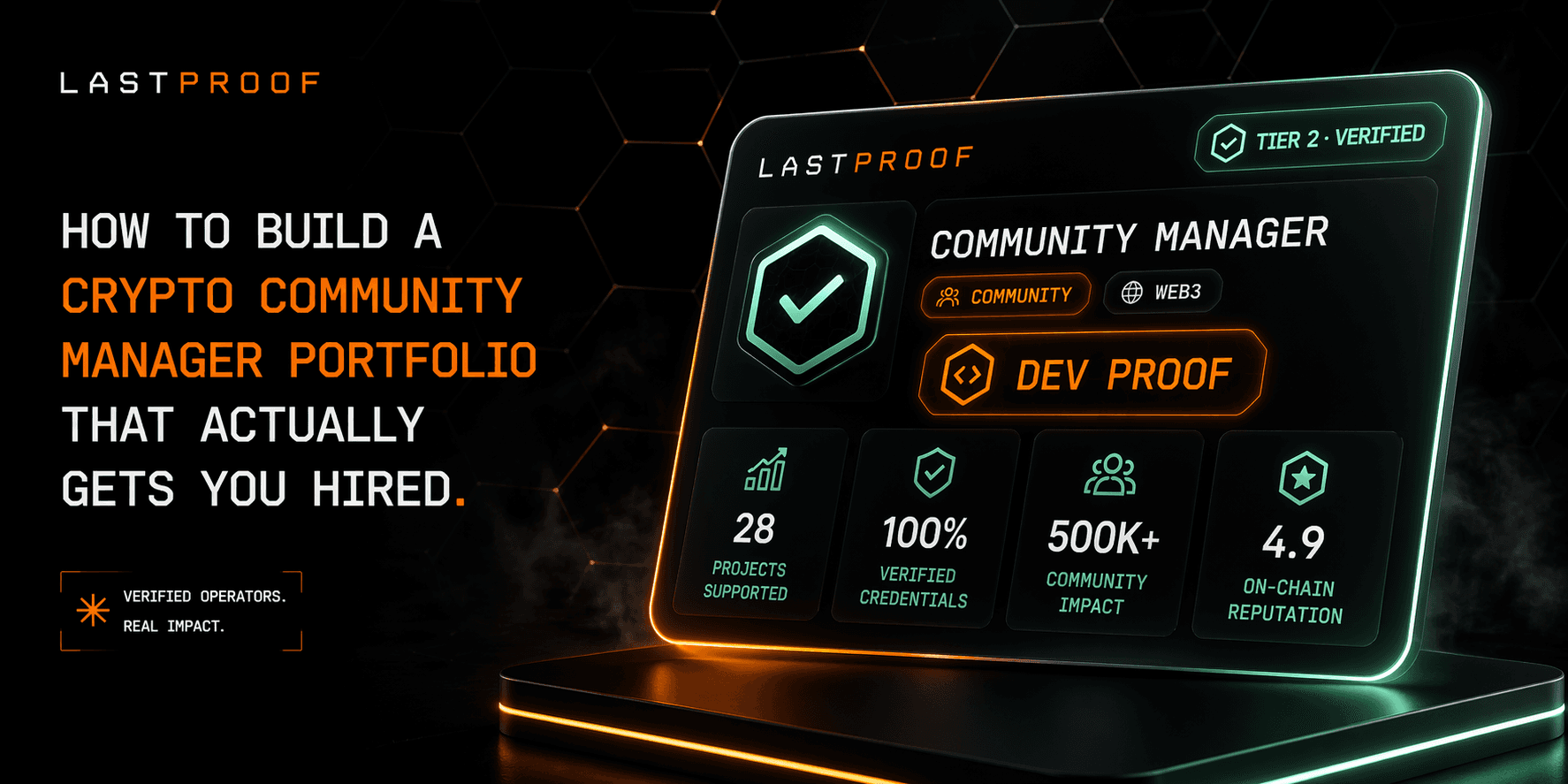
a lastproof profile has seven elements visible to any dev who clicks it. all of them matter for hiring.
a public handle. one url the founder can click. not a dm request, not a "send me your resume." a permanent handle at lastproof.app/@yourhandle.
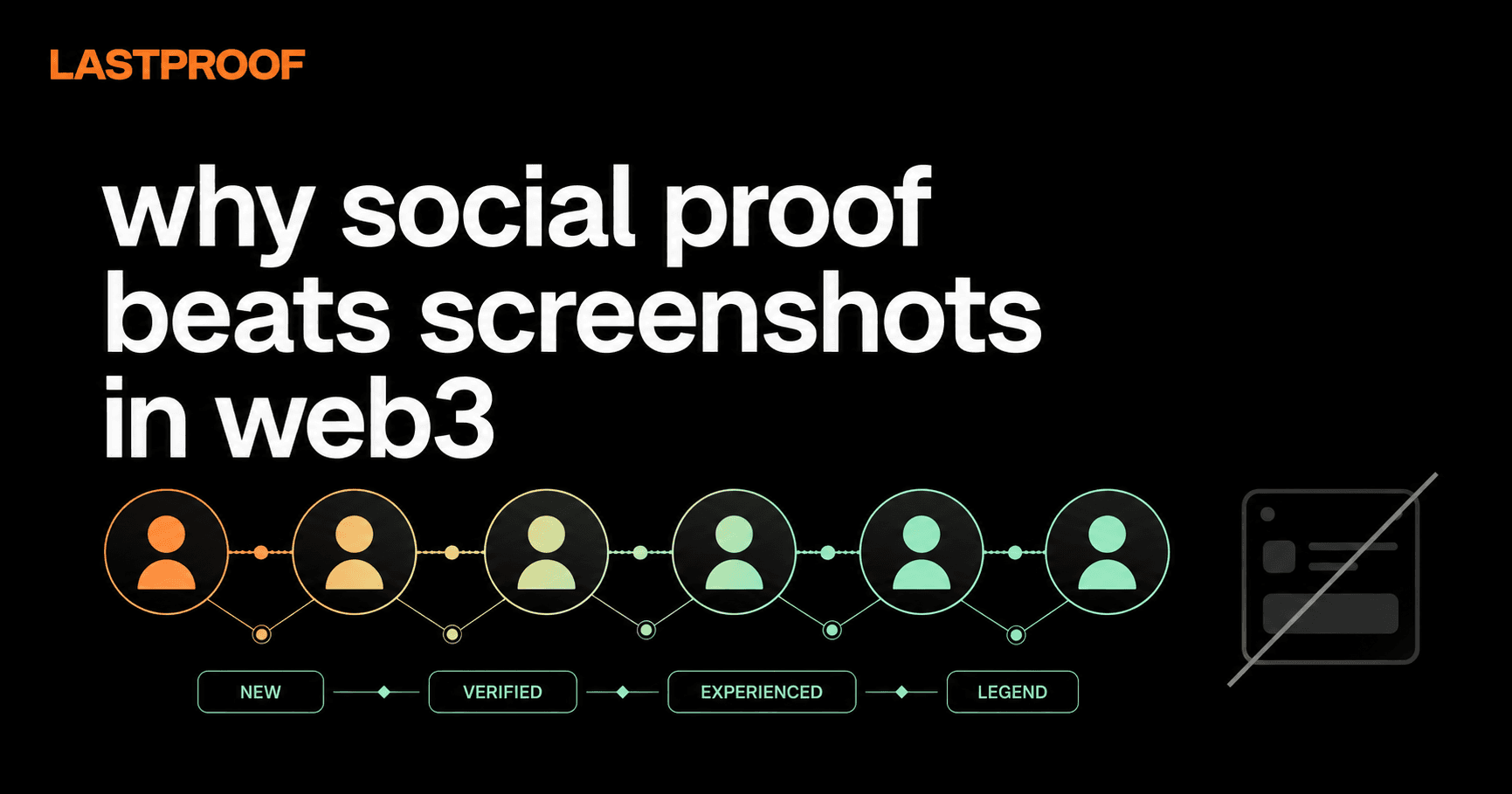
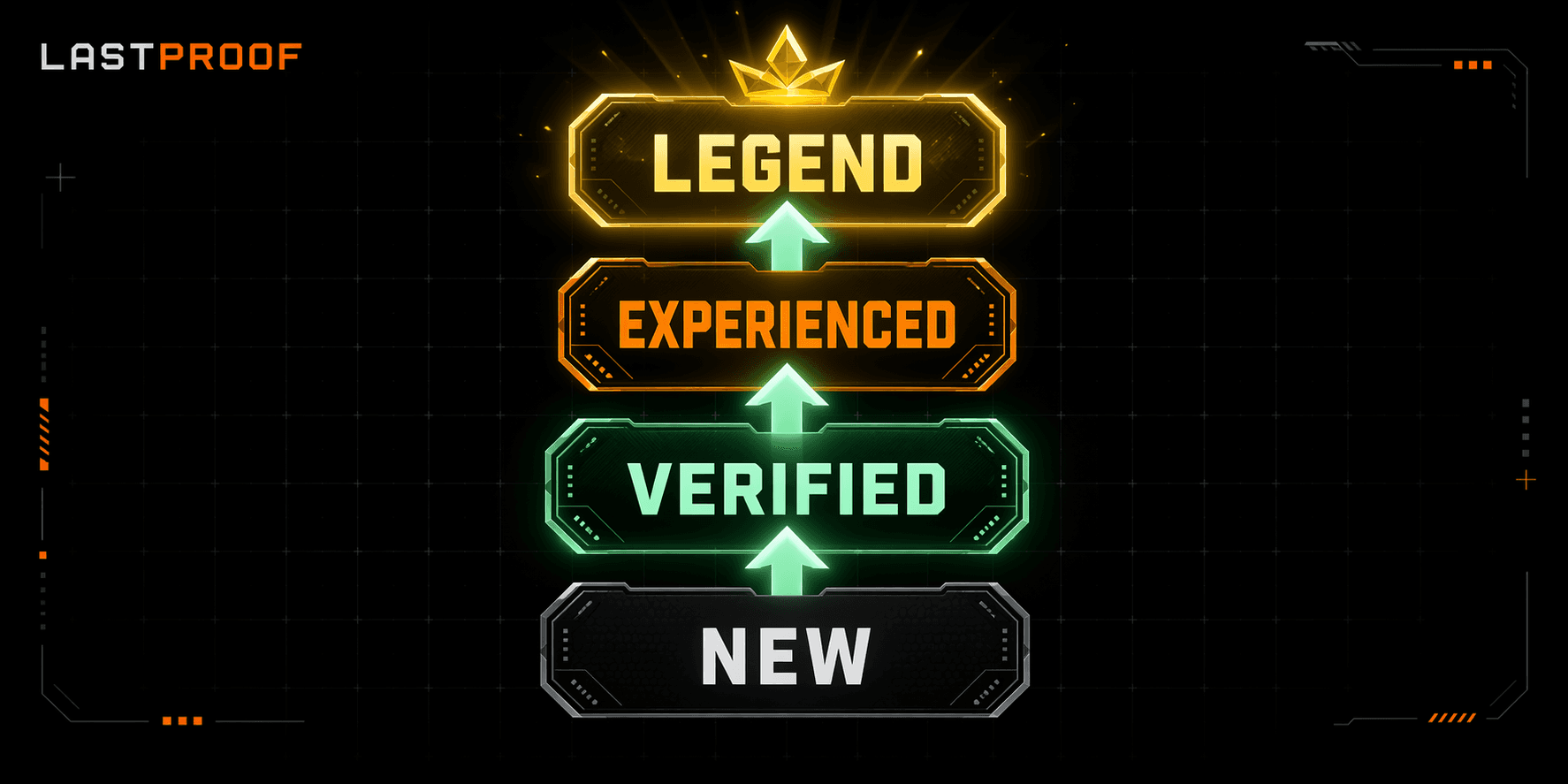
the trust tier badge. visible at the top of the profile. four tiers: NEW (0+ proofs), VERIFIED (10+), EXPERIENCED (25+), LEGEND (50+). tier is the first thing a founder reads.
the pitch. one paragraph describing who you are, what you do, and what niches you own. your only piece of free-form copy on the profile.
Proof of Work. the project list. every token or project you've worked on, with dates, role, and linked proofs. this is the meat of the portfolio.
screenshots. a limited gallery of supporting images. not the main signal (never is, since screenshots can be faked) but useful context.
links. pinned channels, websites, socials. X and telegram handles are cryptographically linked to your wallet, so founders know the accounts are actually yours.
verifications. a table of on-chain proofs. standard proofs ($1 from past collaborators) and DEV proofs ($5 from the project dev, the strongest signal because it requires the dev's actual wallet tied to the token's mint authority or first-5 holder list).
none of these elements require design skill. all of them require receipts.
the step-by-step build
here's the actual sequence.
step 1: claim the handle. lastproof.app/manage. free forever for the first 5,000 operators; $10/month after that (40% off when paying in $LASTSHFT, or pay in SOL or USDT). takes under two minutes. pick a handle you'll use across crypto.
step 2: add every project you've ever worked on. dead ones, live ones, rugged ones, successful ones. the full list is the portfolio. you're not bragging, you're building a record. include role (cm, mod, raid lead, etc), dates, and a link to the token if it still exists.
step 3: message every past collaborator. other cms, mods, raid leaders, kols, anyone who worked on the same project. ask them to drop a $1 verification on your profile. most will if you reciprocate.
step 4: ask the project devs you worked with for a DEV proof. this is the high-leverage ask. $5 from them, permanent signal for you. even dead projects can drop a DEV proof if the founder is still reachable. especially dead projects, actually, because the founder has no reason not to, and the proof gives you credibility for a project that otherwise disappeared.
step 5: keep the profile updated. every new gig, add it. every completed milestone, add it. the profile is live. the projects that come after today are what keep it current.
what to say to a past dev asking for a verification
most cms never ask for verifications because they don't know how to ask. the ask is simple.
"hey, i'm building out my cm portfolio on lastproof. would you be willing to drop a $5 DEV proof on my profile for the work i did on [project]? it's permanent proof that i actually worked there, which helps me on future gigs. here's my handle: lastproof.app/@yourhandle. takes 30 seconds."
that's the message. it works because the ask is small, the friction is low, and most devs are happy to confirm work that actually happened. the ones who won't verify either don't remember the work (rare if you actually did it) or had a falling out with you (in which case no portfolio helps).
what to do if your biggest project rugged
most cms have a top project on their resume that rugged. the instinct is to leave it off.
leave it on. add it to the profile. ask the other operators who worked on the same rugged project to verify. the fact that the project rugged doesn't diminish your work on it. it actually strengthens the signal if you can show you were working while it was live, because it proves you've survived one.
the collaborator network of a rugged project is often the strongest verification cluster an operator has, because everyone involved wants to document their work for future gigs. reach out.
how founders evaluate the profile in under 60 seconds
this is the actual flow a dev runs when shiftbot surfaces you or your profile lands in their dms.
five seconds: check the trust tier badge at the top. NEW = no track record yet. VERIFIED = someone else put money on you. EXPERIENCED or LEGEND = take the meeting.
ten seconds: check for Red Flags (30+ days inactive, category sprawl, zero DEV proofs). any of these and the founder discounts you hard.
twenty seconds: read the pitch. is this operator claiming to do your niche, or are they generalist? specialists win the filter.
thirty-five seconds: scan the Proof of Work list. one or two projects = green cm. eight or more = has been in the trenches. click through one to sanity-check the token still exists.
fifty seconds: check the verifications table. DEV proofs jump the queue. DEV proofs from projects the founder has heard of jump to the front.
sixty seconds: glance at pinned links — does their X/telegram activity match the pitch. decision made.
the operator who optimizes for this evaluation wins. the operator who writes long notion pages loses.
things to avoid on your portfolio
don't inflate numbers. claimed member counts that don't match what the dev remembers will get called out. DEV proofs go cold fast if there's a trust break.
don't list projects you barely touched. padding the list dilutes the signal. a tight profile with eight well-verified projects beats a sprawling one with thirty thinly-proofed ones.
don't fake the work. the whole system is designed to catch this. a bought verification from a wallet that isn't connected to the project's treasury or team addresses stands out immediately. the cost of getting caught is a permanent reputation hit.