how to know if a crypto influencer will actually deliver (before you pay them)
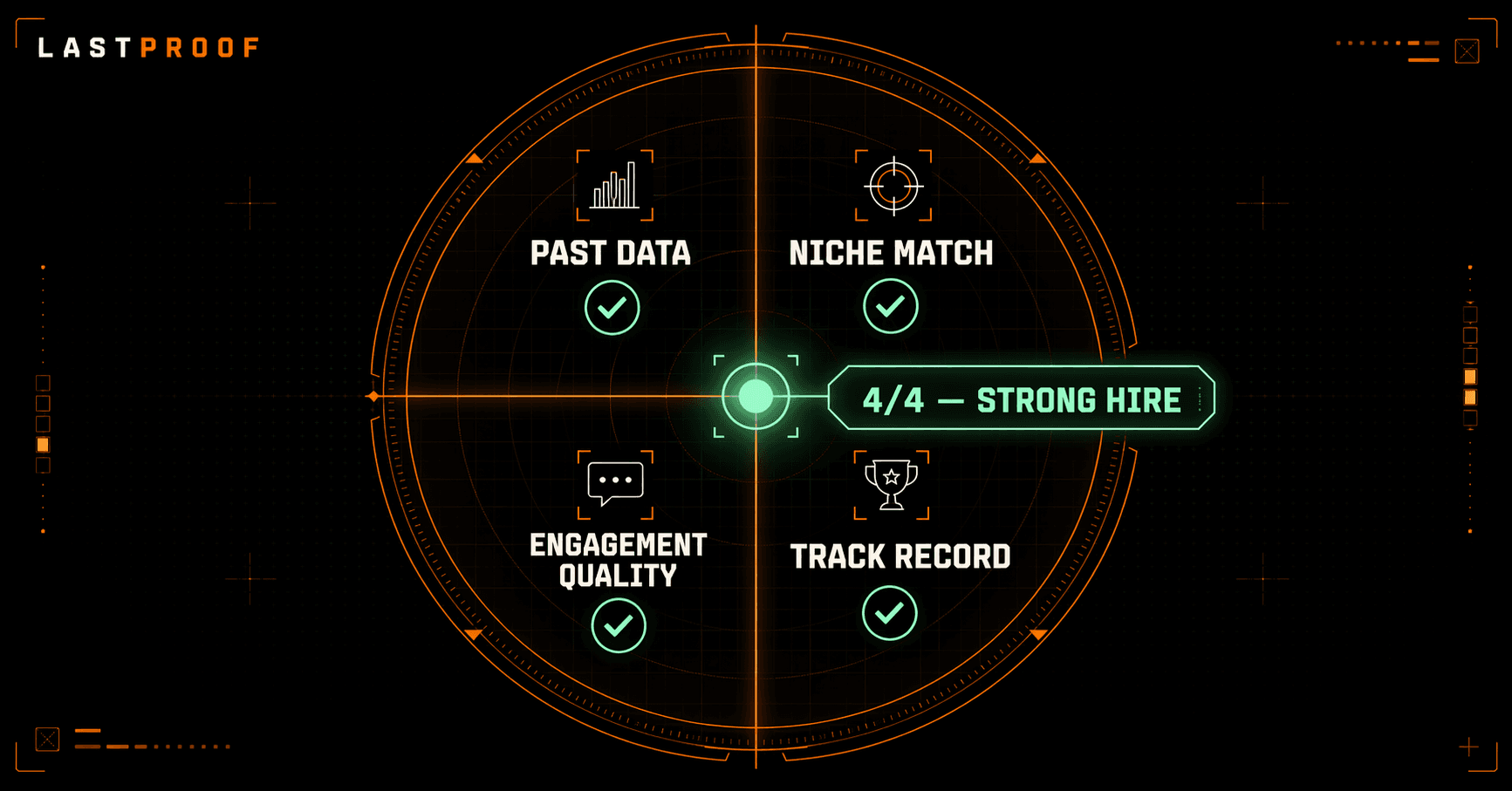
predicting whether a crypto influencer will deliver real results for your token comes down to four measurable signals: past-project conversion data, niche match to your vertical, engagement quality from trading wallets, and a verifiable track record of paid work (hit SCAN GRID on lastproof to pull that track record in seconds). devs who check all four before paying see 3-5x better results from kol spend than devs who pick based on follower count or vibe. this post breaks down each signal and how to score it in under 15 minutes.
what "delivering" actually means for a kol post
before you measure delivery, define it.
delivering doesn't mean the post got 10,000 likes. likes are easy to buy and don't correlate with token activity.
delivering means the post produced one or more of these outcomes:
- buyers: new wallets buying your token during or after the post's visibility window.
- tg/discord joins: measurable new member flow from the post's reach.
- follower flow: real crypto wallets following your project account.
- narrative lift: other accounts quoting or expanding on the post, extending its reach organically.
a kol who produced strong outcomes on the last five projects will probably produce them for you. a kol whose posts got 10,000 likes but produced zero trackable buyers for past projects won't.
the job is predicting which one you're dealing with.
signal one: past-project conversion data
the strongest predictor. ask the kol directly: "on your last three paid posts, how many new holders joined the tokens you promoted, measured by on-chain activity in the 6 hours after the post?"
a kol who can answer this with real numbers is a kol who tracks their own performance. they are almost always the ones who deliver.
a kol who says "i can't share that," "it's complicated," or "my posts get huge engagement" is either untracked or deflecting. either way, they haven't demonstrated delivery.
if they won't share numbers, ask their past dev. the dm to a past dev: "did [kol]'s post during your launch drive measurable on-chain activity?" past devs will usually tell you yes or no in one reply.
signal two: niche match
the most underrated signal by far. a kol can have perfect performance on every dimension and still flop for your project if their audience doesn't care about your vertical.
the test: look at the kol's last 10 paid promos. what percentage are in your exact niche? (solana ai agents, base memes, bitcoin l2, etc.)
- 7+ of last 10 in your niche: strong match. their audience is pre-qualified.
- 3-6 of last 10 in your niche: moderate match. expect partial delivery.
- 0-2 of last 10 in your niche: weak match. expect eyeballs without conversion.
a 20k-follower kol whose last 8 paid promos were all solana ai agent tokens will out-convert a 200k-follower generalist for your solana ai agent token, by a factor of 3-10x. this is consistent across every vertical.
signal three: engagement quality
bot engagement inflates numbers. real engagement predicts conversion.
the 60-second test: click into three of the kol's recent paid posts and scan the replies.
real engagement indicators:
- replies from wallets with crypto history (not new accounts, not empty profiles).
- substantive comments that reference the specific project, not generic hype.
- quote-tweets from other real operators, not rt bots.
- follow-up questions that show actual interest.
bot engagement indicators:
- 20+ generic comments like "great project!", "bullish", "wen moon" from anime-pfp accounts.
- replies from accounts with no recent activity outside replies on sponsored posts.
- engagement concentrated in a narrow 10-minute window, then dead (paid boosting signature).
- same commenters showing up on every paid post.
any two bot indicators on a single post is a pass. three is a confirmed pass regardless of their other signals.
signal four: verifiable track record
this is what on-chain profiles solve.
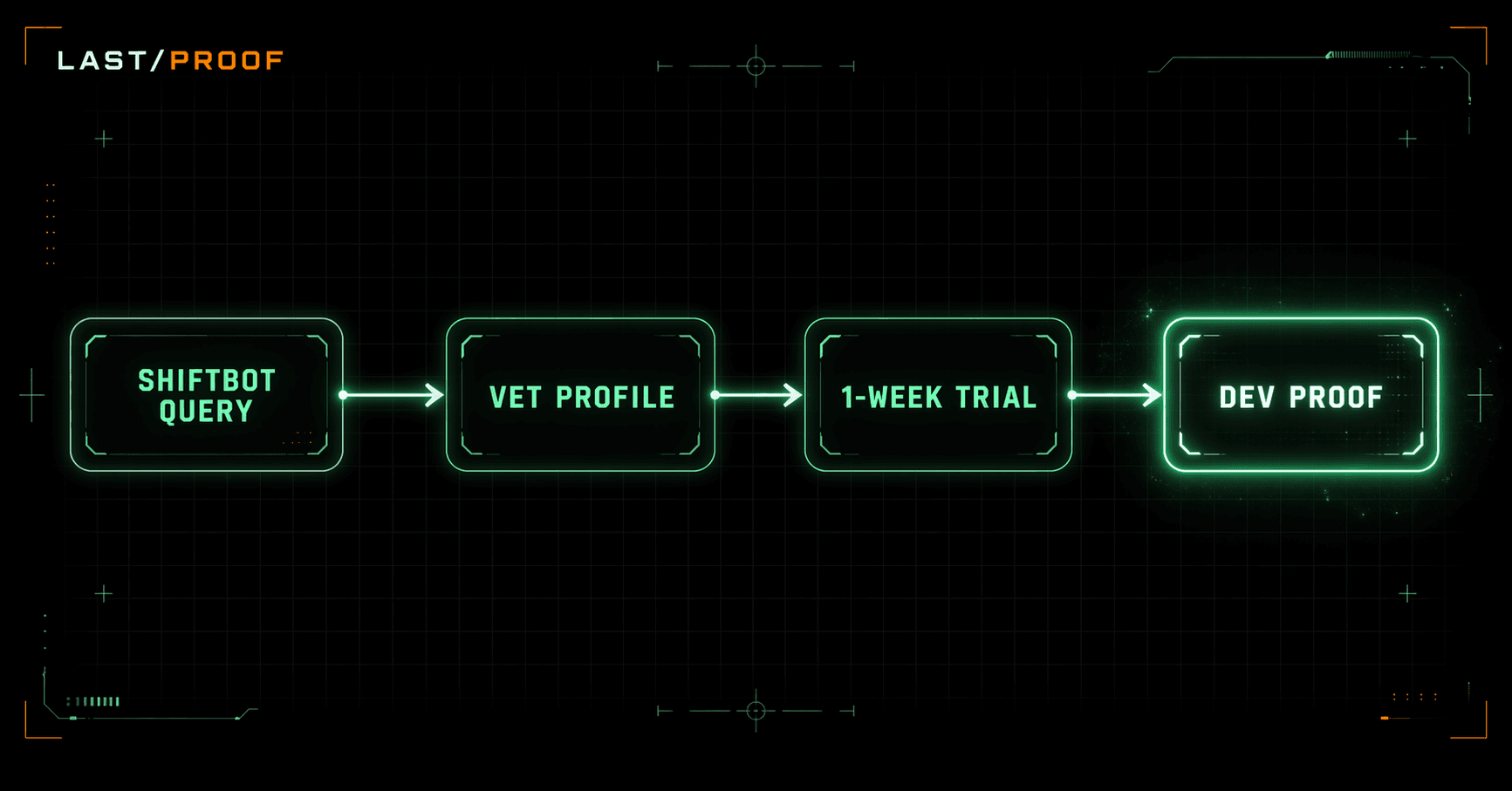
a kol with a lastproof profile containing multiple DEV proofs from past projects has a track record someone else already vetted — the past devs who paid $5 each to post those proofs. this is a materially stronger signal than self-reported past projects. on top of that, lastproof cryptographically ties the kol's X and telegram handles to their wallet, so the identity itself is verified. impersonator kol accounts that scrape a real operator's work and try to claim it can't pass this check.
how to score it:
- 0 DEV proofs + tier 1 NEW: no verified track record. treat as a first-time hire. cap your spend accordingly.
- 1-2 DEV proofs: some track record. ok to pay but insist on half-on-post-live payment structure.
- 3-5 DEV proofs + tier 2 VERIFIED or tier 3 EXPERIENCED: established track record. reliable for standard deals.
- 6+ DEV proofs + tier 3 EXPERIENCED or tier 4 LEGEND: strong track record. these kols are in high demand and price accordingly.
the DEV proof is a costly signal, in the economics sense: past devs had to spend their own money to post it, and the wallet posting it has to be tied to the token's mint authority or first-5 holder list. every proof is a paid solana transaction anyone can click through on solscan — you can't fake this. that's what makes DEV proofs much harder to fake than follower counts, likes, or testimonials. this is also how reputation stops being disposable in this space and burn history finally follows a kol from one project to the next.
the 4-signal score card
combine all four into a simple gate.
- past-project data + niche match + real engagement + verified track record: 4/4 = strong hire, pay with confidence.
- 3/4 signals: acceptable hire, negotiate smaller trial post first.
- 2/4 signals: weak hire, either discount heavily or pass.
- 1/4 or 0/4: pass. move on.
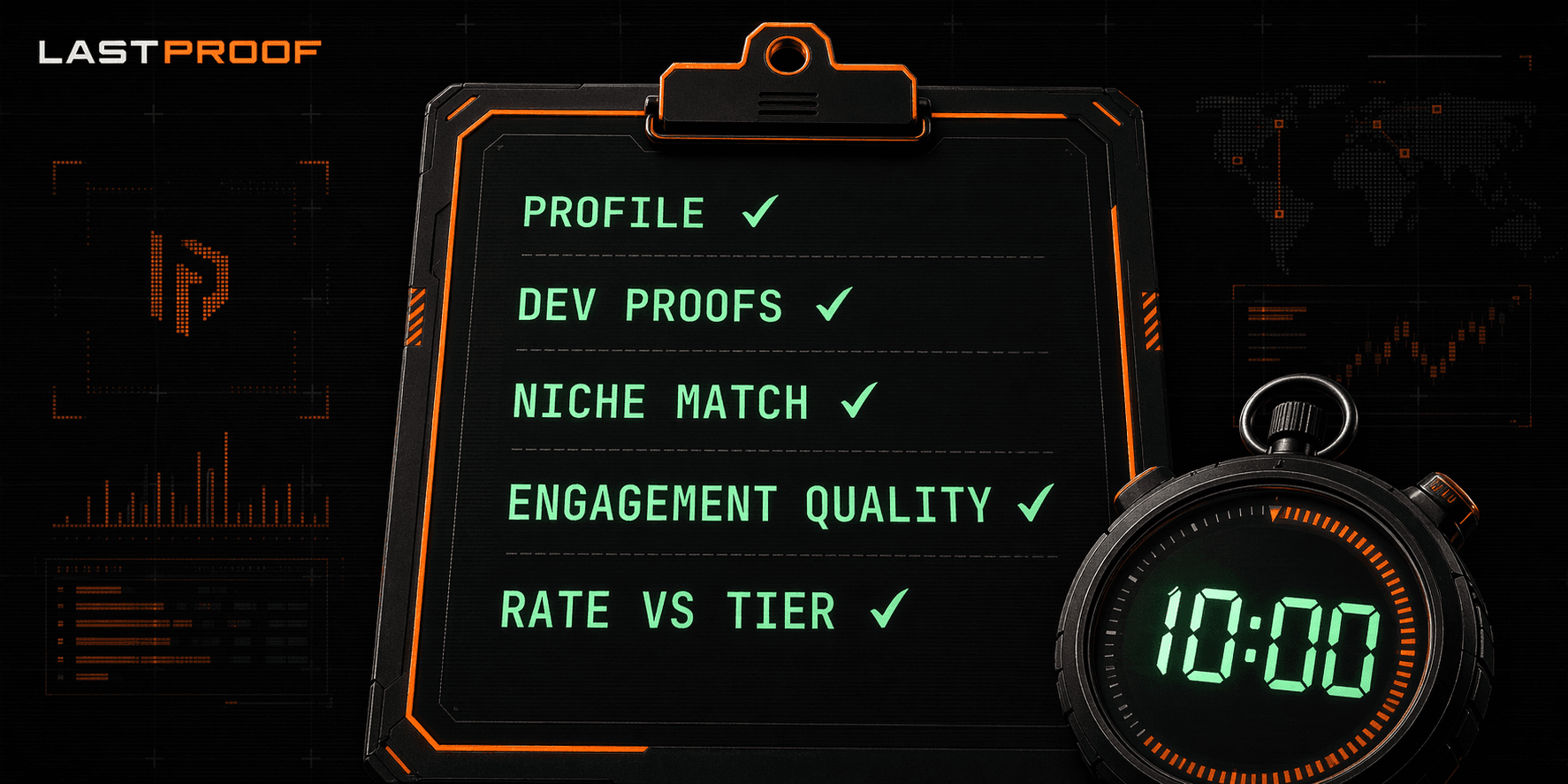
most devs skip this scorecard and pay based on vibe. the scorecard takes 15 minutes and dramatically improves the hit rate on kol spend.
the structural protections that matter
even a kol with 4/4 signals can underperform. the deal structure matters.
half on booking, half on post-live. standard for most deals. protects you if the post never goes up or goes up at the wrong time.
written scope. post timing, thread length, platform, required hashtags or tags, required disclosure language. in writing, archived in email or telegram.
performance-triggered bonus. optional but powerful. "base fee $500, +$300 bonus if post drives 200+ new tg joins within 24 hours." aligns incentives.
DEV proof commitment. agree upfront that you'll drop a $5 DEV proof on their lastproof profile if the post delivers as expected. most kols work harder for this because it's permanent, on-chain leverage for their next gig — it ties back to your mint authority or first-5 holder wallet, so no other dev can produce it for them.
no exclusivity. you're buying one post, not a relationship. allow the kol to post about competitors unless you're paying retainer rates.
what to do if the post underperforms
first, measure before reacting. a post that didn't go viral might still have driven buyers. check on-chain activity in the 6-hour window after the post. if you see new wallet activity, the post delivered even if the likes were low.
if the post didn't drive any measurable activity:
- if you have 4/4 signals, one miss is variance. don't burn the relationship.
- if you have 3/4, review which signal was weak. address it for the next hire.
- if you had 2/4 and paid anyway, this is why. update your scorecard.
either way, drop the DEV proof you committed to only if the kol actually delivered the scope you agreed to. the DEV proof is for scope delivery, not for performance. underperformance is your risk as the payer. no delivery at all is a different problem and shouldn't be proofed.