how to vet a crypto kol before paying them (the 10-minute process)
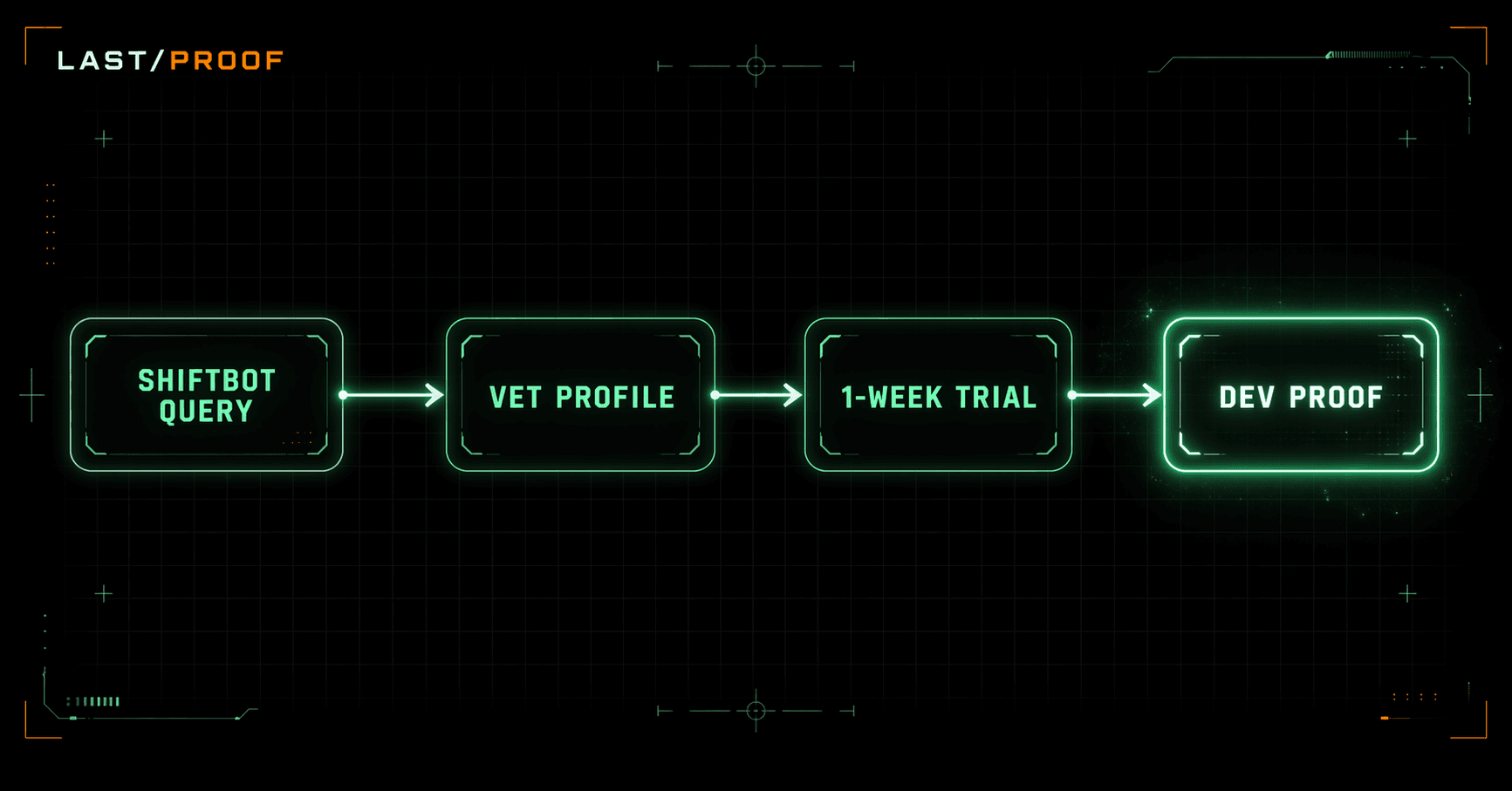
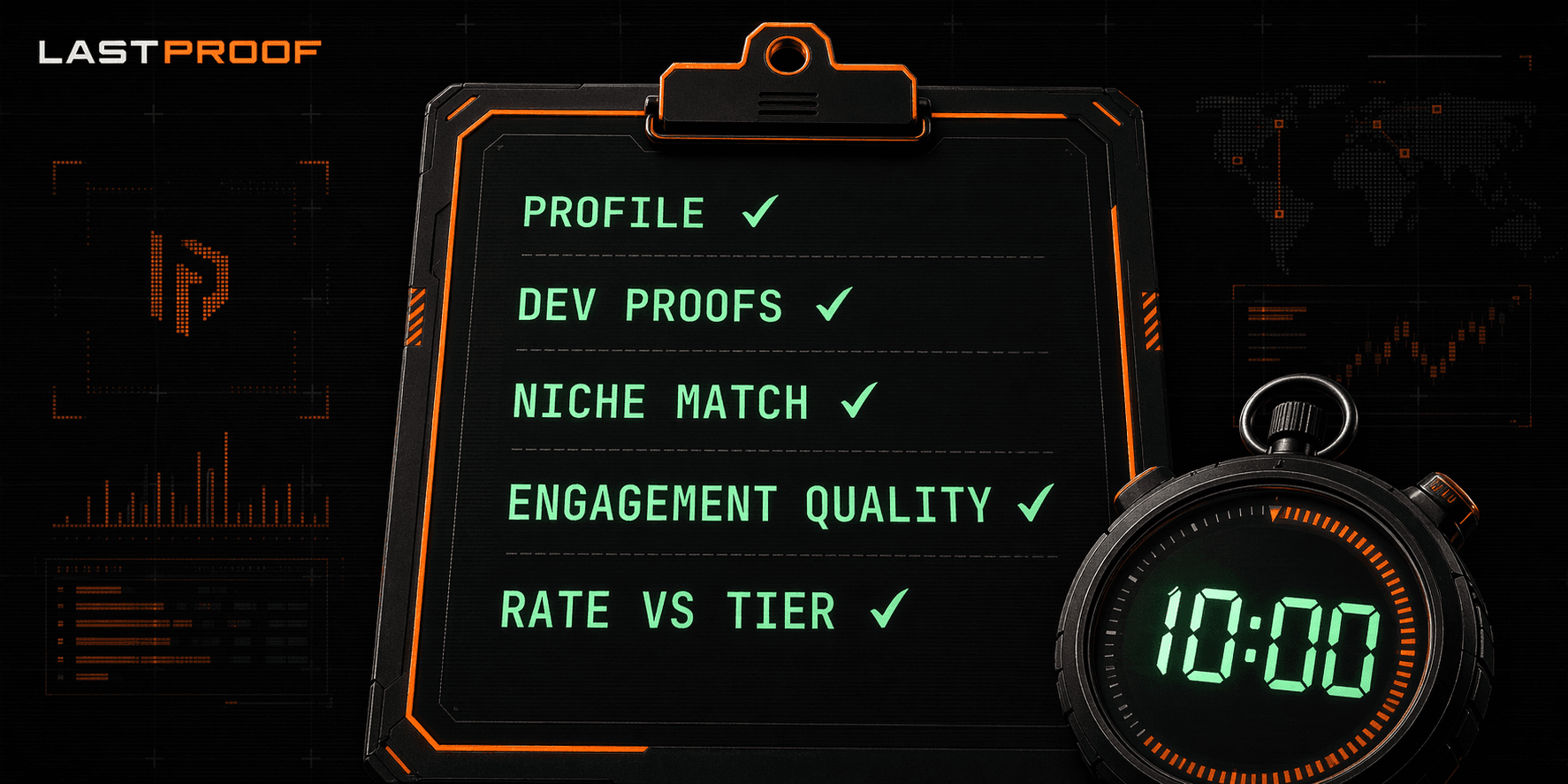
vetting a crypto kol before paying them in 2026 takes ten minutes if you know where to look. the process: verify their follower quality isn't bought, check engagement is from real trading wallets not bots, confirm past paid work through on-chain proofs (hit SCAN GRID on lastproof to pull their profile in one click), and match their niche to your token. devs who skip this step lose an average of $2,000-$10,000 per bad kol hire in wasted post budget plus the opportunity cost of a launch window without real coverage. this post walks through the full ten-minute checklist.
why most kol vetting fails
most devs vet kols wrong because they look at the wrong signals.
follower count. irrelevant as a quality signal above the lowest tier. follower counts are trivially inflated. a 200k-follower kol whose posts average 50 likes from obvious bot accounts is worth less than a 20k-follower kol with 300 engaged replies from wallets that actually trade.
pinned testimonials. can be written by anyone. no way to verify the claimed result came from the kol's work.
"i worked with these projects" screenshots. impossible to verify. the screenshot might be real but the engagement came from other sources. the project might not even remember the kol. screenshots lie. every anon sounds the same until you check the on-chain receipts.
vibes. aggregate feel of "this account looks legit." not a repeatable process, not a reliable signal, and grifters are very good at looking legit at first glance.
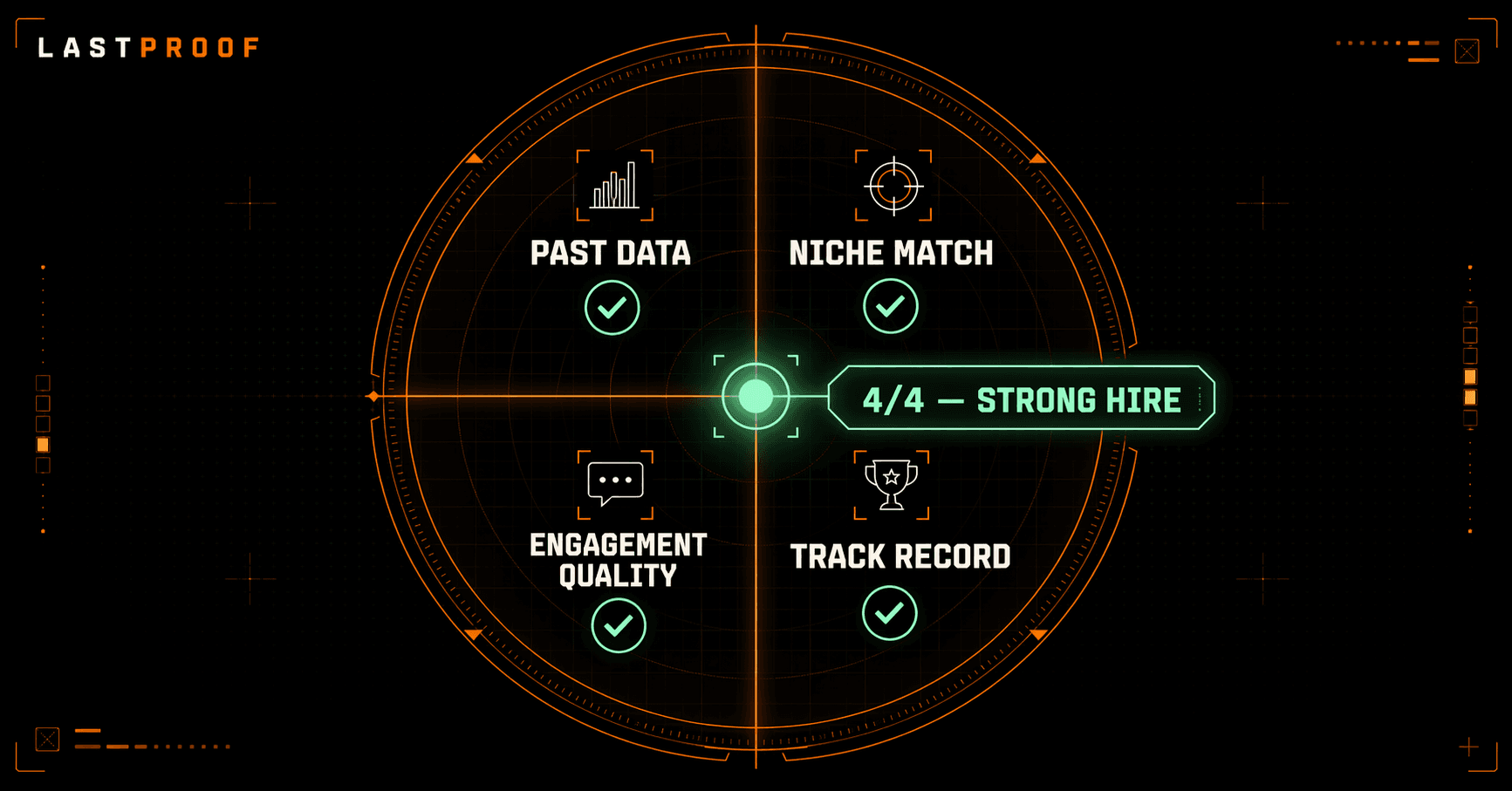
the right vetting signals are engagement quality, verifiable past paid work, and niche match. these three signals together predict delivery better than anything else.
the 10-minute vetting checklist
one checklist. run it on every kol before the first post.
minute one: check the public profile. does the kol have a lastproof handle? if no profile, your vetting is entirely based on what you can see publicly on x, which is lower signal. if yes, note the trust tier badge (NEW / VERIFIED / EXPERIENCED / LEGEND) and the total proof count. check for Red Flags on the profile (30+ days inactive, category sprawl, zero DEV proofs) — any of these warrants extra caution.
minute two: count DEV proofs. a kol with three or more DEV proofs (past project devs paid $5 each to confirm the work) is materially lower-risk than one with zero. DEV proofs are the strongest single signal because the dev has to use the wallet tied to the token's mint authority or first-5 holder list to post one — impersonators can't fake them. every proof is a paid solana transaction, so you can click each one on solscan and see the transfer yourself.
minute three: count standard proofs. these are $1 proofs from other operators. useful secondary signal. a kol in tight rotation with other working operators (multiple proofs from the same handles across projects) is usually a working kol. on lastproof, the kol's X and telegram handles are cryptographically linked to their wallet, so you know the accounts in the pinned links are actually theirs — impersonator grifter accounts can't pass this.
minute four: click into one past project listed on the profile. is the token still live? does their listed role match what you'd expect? how did the project perform during their coverage window (check token chart for the date range)?
minute five: scroll their last 30 days of x posts. what's the ratio of organic content to paid promos? a kol with 80%+ paid promos and 20% organic will underperform because their audience tunes out. a kol with 70% organic and 30% paid does better.
minute six: check engagement quality on three posts. click into the replies. are commenters real wallets (profiles with crypto content, active followers, history) or spam (k-pop accounts, bot-looking profiles, single-purpose accounts)? check wallet addresses if they're public.
minute seven: check niche match. does the kol's audience care about your vertical? a kol who covers solana memes mostly posts about solana memes. if you're launching a base l2 token, they're a niche mismatch even if their track record is great.
minute eight: look for rug coverage. scroll further back. has this kol promoted projects that rugged? every kol has some, but the ratio matters. kols who promote 1-2 rugs out of 20 projects are unlucky. kols who promote 10 rugs out of 20 are grifters.
minute nine: dm one past dev. "hey, [kol handle] did a post for you on [project]. any feedback on how the post performed?" past devs usually respond within a day.
minute ten: check their rate vs. their tier. a kol charging $2,000 per post at tier 1 NEW with no DEV proofs is overpriced. a kol charging $500 per post at tier 3 EXPERIENCED with five DEV proofs is underpriced (and worth grabbing fast). the rate should correlate with the track record.
ten minutes. one kol. at the end, you know whether to pay or pass.
engagement fraud signals
the specific patterns that indicate bought or faked engagement:
wildly inconsistent engagement-per-post. one post gets 2,000 likes, the next two get 30 each, then another burst. bots boost specific paid posts while organic content dies. a real audience engages consistently.
reply bots. generic comments like "great post" or "bullish!" from accounts with no crypto history. scroll 20 replies deep. if half are generic, the engagement is bought.
follower-to-engagement ratio. a 50k-follower kol with posts averaging 10 likes has bought followers or lost their audience. organic kols in that range typically see 50-500 likes per post.
geographic mismatches. a kol whose audience is "supposed to be" in crypto-heavy regions (us, sea, eu) but whose top replies are from regions where their content doesn't resonate. boosted engagement from click farms.
"removed" bot accounts in older replies. click replies on a post from three months ago. if many accounts show as "this account no longer exists," the original engagement was from bots that got suspended.
any two of these signals is a pass. any three is a confirmed pass.
niche match heuristics
niche match is the single most underrated vetting signal.
a kol can have a perfect profile, real engagement, and genuine DEV proofs, and still be the wrong hire because their audience doesn't care about your vertical.
the test: look at the kol's last 10 paid promos. how many were in your niche or adjacent? if fewer than 3, they don't have an audience for your token. their post will reach eyeballs but not convert.
the strongest kol hires for your project are kols whose last 5 paid promos were all in your exact niche. their audience is pre-qualified.
the ask-for-reference script
most devs never dm past devs because they don't know what to ask. here's the message that works:
"hey [handle]. i'm considering paying [kol handle] for a post on my launch. i saw they did [date range] coverage for [your past project]. two questions: did the post drive measurable activity (buyers, followers, tg joins)? would you hire them again for your next project? no worries if you can't share numbers, just a yes/no on both is enough."
most past devs respond within 24 hours. if you get three "would hire again" responses from three separate projects, that's a high-confidence green light.
what to do after you verify
if the kol passes the vetting, the payment structure should be:
- stablecoins, not your token, unless the kol specifically asks for a token-only deal and you're fine with it.
- half on booking, half on post-live and post-confirmed (or 100% on post-live if the kol insists and has enough track record to command it).
- include in the agreement that you'll drop a $5 DEV proof on their lastproof profile after the post delivers as expected.
the DEV proof is the reciprocal value exchange that makes this ecosystem work. kols work harder for devs who drop DEV proofs because those proofs are what lets them charge more on the next gig. devs get better rates from kols who value being proofed. reputation stops being disposable and burn history follows them from project to project — so everybody wins except grifters, who get filtered out of shiftbot and The Grid results.
what to do if they fail the vetting
save ten minutes and the $500-$5,000 post fee. move to the next candidate. there are a lot of kols. there are far fewer legit ones, but the ones who pass vetting consistently outperform.