why telegram mods keep getting stiffed in crypto (and how much they should actually be paid)
crypto telegram moderators get paid $500 to $1,500 per month for part-time coverage, or $4 to $15 per hour for 20 to 40 hours a week. those are the market rates. the actual amount many mods receive is less. projects go quiet, tokens promised as bonuses go to zero, and the work disappears when the channel gets deleted. this post explains why the gap between "market rate" and "actually received" is so wide, and what to do about it.
the market rate vs. the actual rate
cryptojobslist's community moderator salary page and published freelance gig postings put the 2026 market rate at:
- part-time (10-20 hours/week): $500 to $1,000/month
- fuller-time (30-40 hours/week): $1,500 to $3,000/month
- hourly: $4 to $15/hour depending on region and experience
these ranges are real. working mods do earn these amounts. the problem is not the rate card.
the problem is that a significant percentage of mods start a gig at one of these rates and end the gig having received a fraction of what they were promised. cryptojobslist's own moderation salary page includes the line: "project owners often make big profits while moderators, who keep the community alive, are underpaid or even unpaid."
the four ways crypto mods get stiffed
the slow fade. project founder stops responding in dms. payouts get delayed by a week, then two, then a month. the mod is still working because the community is still active. eventually the token dumps, the founder goes dark, the mod is out two to four weeks of labor.
the token-only bait. founder offers $500/month plus a token allocation "worth way more when we launch." mod accepts. project launches, token peaks at a mid-range price for an hour, crashes. the promised $3,000 in tokens is now worth $80.
the deleted channel. founder has a falling out with the mod, sometimes over nothing, sometimes because the mod flagged suspicious behavior. founder removes the mod from the admin list. channel keeps running. mod has no proof they ever worked there.
the rug. project rugs before payout. mod loses the last period of pay and all token bonuses. worse, the work is effectively unverifiable for future gigs because the project is a ghost.
each of these patterns is made worse by the same underlying problem: the mod's work is not permanently recorded anywhere the next project can verify it.
what real mod work is actually worth
a good mod in a crypto community does work that compounds. a 50,000-member telegram with sub-1% spam rate, 15%+ daily active members, and no fud spiraling out of control is worth thousands a month to the project. projects that don't value this discover how much it's worth the first time a bot farm rolls in at 3 am and no one is there to clean it up.
the negotiation problem isn't that the work is low-value. it's that the work is low-visibility. a mod can scrub 400 scam links in a week and the channel looks the same as if they'd done nothing, because doing nothing is what the results would look like if bots overran the channel.
this is why mod work needs receipts more than any other crypto marketing role.
what a fair mod package looks like
based on deals that actually hold up in 2026:
base pay: weekly, in stablecoins, no exceptions. weekly cadence caps the stiffing risk at one week. $125 to $375 per week for 10-20 hours depending on experience.
token bonus: optional, with vesting. if offered, treat as a lottery ticket. 0.05% to 0.2% of supply with 6-month vesting is a reasonable ask for a scale-up project. without vesting, decline.
written scope, archived. hours, channels, shift coverage, response time expectations. in telegram or email, dated, archived in a place the mod controls.
admin access tied to the gig, not to a trust relationship. if the founder removes admin access, that itself should be a written breach condition.
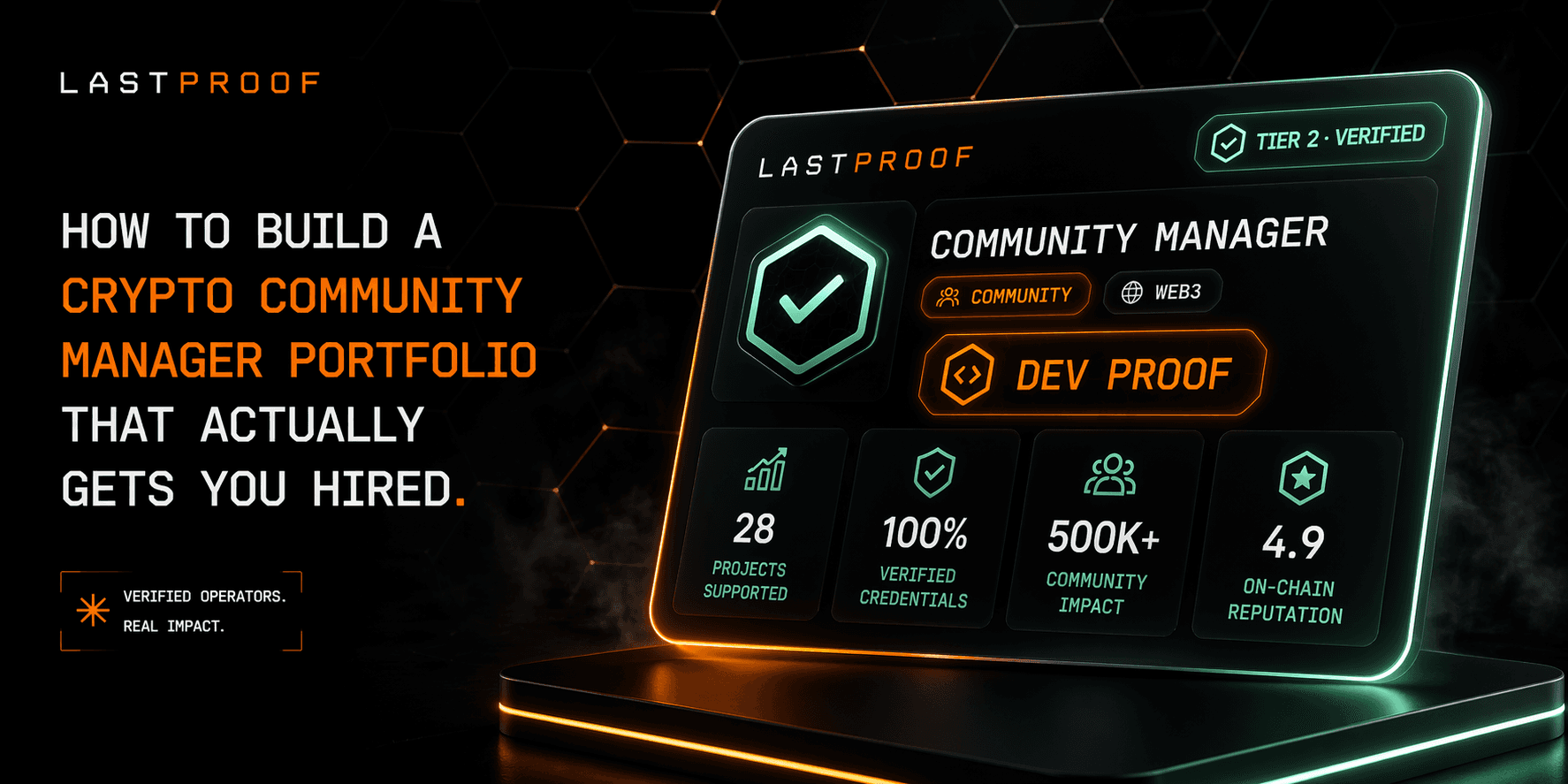
a public proof for each completed gig. this is the new part. the mod closes each gig with an on-chain proof on their lastproof profile — a standard proof ($1 from a collaborator) or, ideally, a DEV proof ($5 from the project dev, posted from the wallet tied to the token's mint authority). the next gig can check in 60 seconds. memecoins die. your reputation shouldn't.
what to do if you've already been stiffed
the lost pay is lost. focus on the receipt.
go to lastproof.app/manage and claim a handle. free forever for the first 5,000 operators — $10/month after that, with 40% off on subscription and proofs when paying in $LASTSHFT (SOL and USDT also accepted). add every project you've moderated to your Proof of Work, even the ones that rugged. especially the ones that rugged. every past collaborator (other mods, cms, kols) who knows you worked there can drop a $1 standard proof on your profile. those proofs sit on your profile permanently — every proof is a paid solana transaction anyone can click through. the channel can disappear. the proofs don't.
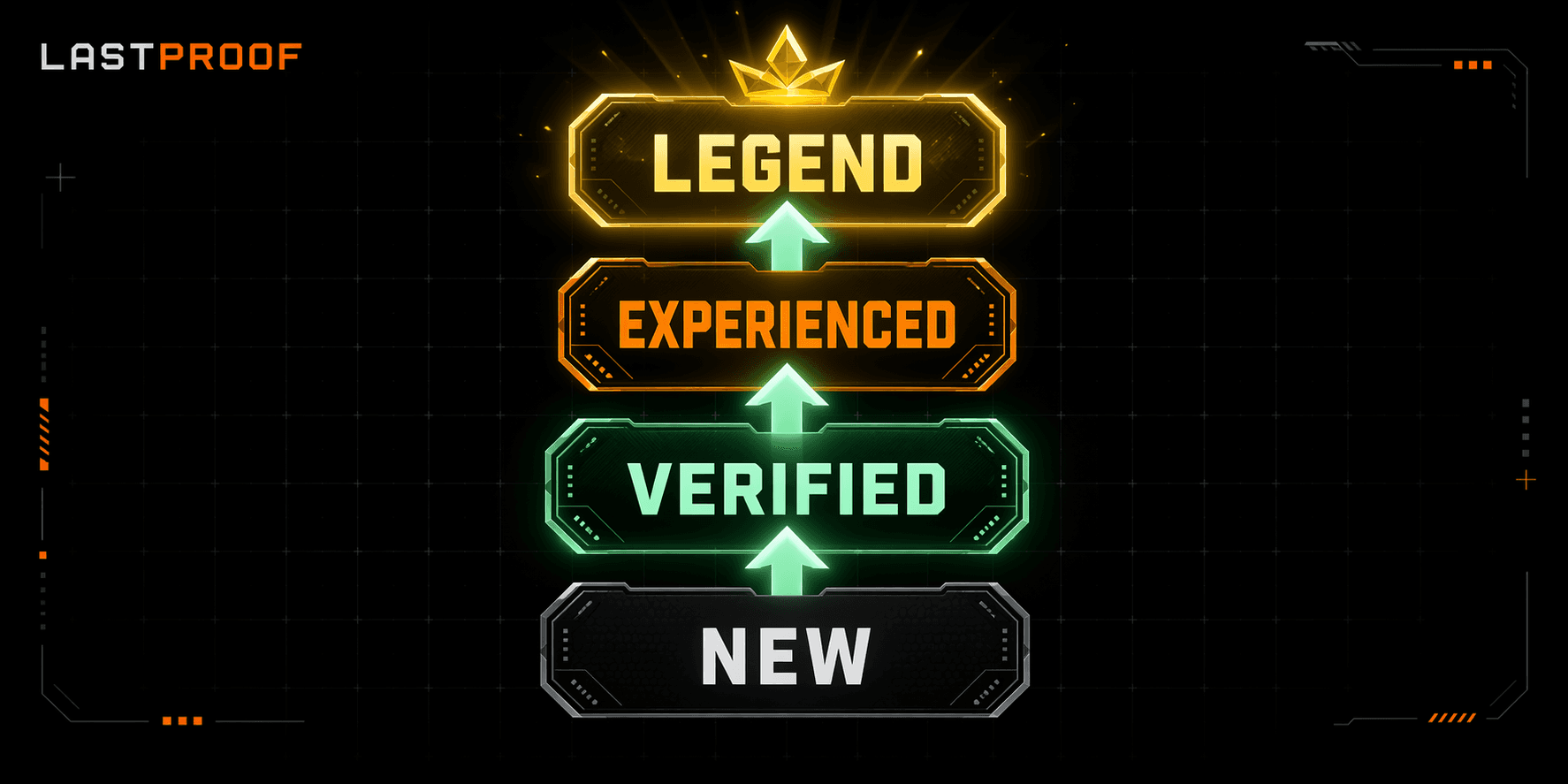
when you pitch the next project, send them your lastproof.app/@handle. they can see every project you've worked on. they can see which ones have DEV proofs (the $5 proofs posted from the wallet tied to the token's mint authority or first-5 holder list — impossible to fake). they can see your trust tier climbing from NEW to VERIFIED (10+ proofs) to EXPERIENCED (25+) to LEGEND (50+) with each completed gig.
this is the thing that closes the pay gap. if a project knows they can't stiff you without leaving a public record, the pay converges toward the market rate instead of the "unknown freelancer" floor.
how to stop taking rug-risk gigs
the pattern is consistent. projects that rug have certain tells. no DEV proofs on any of their past mods' profiles. new project with founders who won't doxx. unwillingness to put scope in writing. push for token-only payment. no published treasury. if shiftbot is returning results for your niche, the filter is already doing the first round of this work for you — the grifter projects usually can't produce the DEV proofs that make them rank.
you don't need to refuse every risky gig. you need to charge a premium for them, take only stablecoin pay, and weight your time toward projects that pass the vetting.